
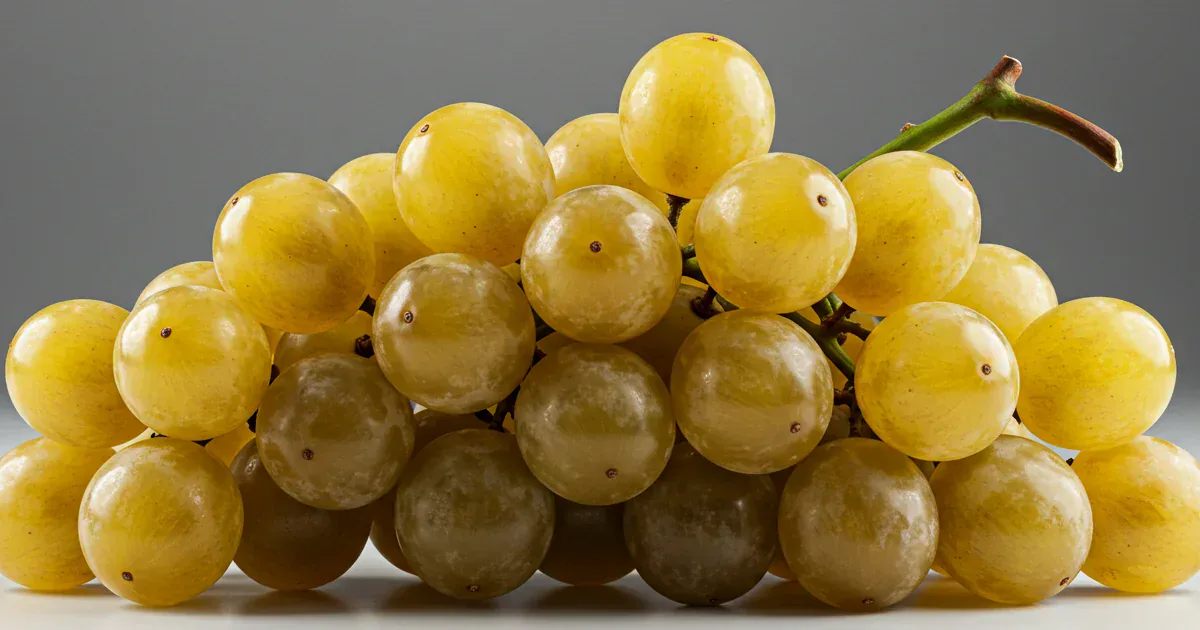
Origin & History
This entry covers Muscat Blanc a Petits Grains (Moscato Bianco in Italian), the highest-quality member of the Muscat family and the principal variety behind Asti Spumante, Moscato d'Asti, Muscat de Beaumes-de-Venise, and dry Alsace Muscat. It is distinct from the lower-quality Muscat of Alexandria (Muscat a Gros Grains) and the lighter Muscat Ottonel; Robinson, Harding & Vouillamoz (Wine Grapes, 2012, ISBN 978-1-846-14446-2) document these distinctions carefully. The variety is among the oldest cultivated wine grapes, with possible ancient Mediterranean origins, but its precise geographic origin and wild ancestor have not been definitively established. Registered in the OIV VIVC (Wikidata: Q279).
Viticultural Characteristics
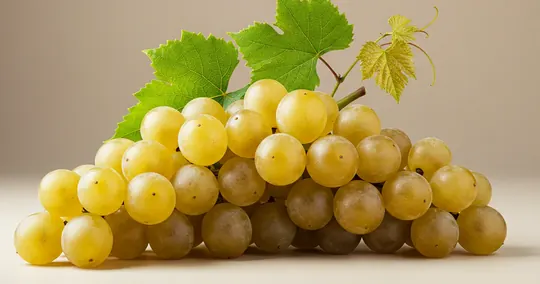
Small, round berries (petits grains) are susceptible to Botrytis cinerea, coulure (poor fruit-set in cool wet flowering conditions), and oxidation. It ripens early in warm Mediterranean climates. The variety is planted across southern France (Frontignan, Beaumes-de-Venise), Piedmont (as Moscato Bianco), Greece (Samos, Kefalonia), and Rutherglen, Australia (where a mutation called Brown Muscat is used for an oxidatively aged fortified style). Protecting the very volatile grape and floral aromatics from oxidation is the central viticultural and cellar challenge.
Winemaking Style
Three production styles diverge sharply. Fortified VDN (Vins Doux Naturels, southern France): fermentation arrested with neutral spirit, retaining residual sugar (Muscat de Beaumes-de-Venise, Muscat de Frontignan). Sparkling (Piedmont): low-alcohol (5-9% abv), lightly sparkling Asti Spumante and Moscato d'Asti from Moscato Bianco. Dry still (Alsace Muscat d'Alsace): fermented fully dry, the most food-friendly and unusual expression. All three styles prioritize cool fermentation to preserve the variety's primary grapey-floral aromatics.
Food Pairing
- Moscato d'Asti (sparkling): fresh fruit, light almond pastries, panna cotta, aperitivo
- Muscat de Beaumes-de-Venise (fortified): melon, foie gras, fresh strawberries, soft blue cheese
- Dry Alsace Muscat: asparagus, light white fish, fresh goat's cheese
- Rutherglen Muscat (fortified, oxidatively aged): Christmas pudding, rich fruitcake, dark chocolate
Sources
Claims marked (✓) were cross-referenced against publicly accessible documents at time of authorship (2026-09-02)
- (✓) Robinson, J., Harding, J., & Vouillamoz, J. (2012). Wine Grapes: A Complete Guide to 1,368 Vine Varieties. Allen Lane. ISBN 978-1-846-14446-2. Muscat blanc a petits grains entry.
- (✓) Consorzio dell'Asti DOCG. astidocg.it
- (✓) Wikipedia, "Muscat blanc a petits grains". en.wikipedia.org/wiki/Muscat_blanc_%C3%A0_petits_grains (Wikidata: Q279)
- Geographic origin of Muscat Blanc a Petits Grains not definitively established; ancient Mediterranean attribution is widely cited but unconfirmed by genetics research.
Metrics
| Global Plantings | 30 kha |
|---|---|
| Typical ABV | 12 % |
Descriptors
| Primary Color | White |
|---|---|
| Climate Affinity | Warm Mediterranean |
| Aromatic Profile | Fresh grape, orange blossom, musk |
| Key Regions | Mediterranean basin, Alsace (Ottonel), Asti |
| Parentage | Ancient Muscat family (many related cultivars) |
| Skin Character | Variable; Muscat Blanc thick enough for late harvest |
Notable Regions & Styles (6)
Key producing regions for this variety, showing the dominant style and the applicable classification framework (AOC, DOC, AVA, GI, DO, DAC, PDO).
| Region | Country | Style | Classification |
|---|---|---|---|
| Asti (Piedmont) | Italy | Moscato d'Asti (lightly sparkling, 5-6.5% abv) and Asti Spumante (fully sparkling) | DOCG |
| Beaumes-de-Venise | France | Fortified VDN; peach, apricot, orange blossom; served chilled | AOC |
| Frontignan | France | Fortified VDN; one of France's oldest Muscat appellations | AOC |
| Alsace | France | Dry still Muscat d'Alsace; the most food-friendly expression | AOC |
| Samos | Greece | Fortified and sweet; old vines on terraced hillsides | PDO |
| Rutherglen | Australia | Oxidatively aged fortified; Brown Muscat clone; rich, raisined, complex | GI |
Frequently asked questions
What is Muscat wine?
Muscat covers a family of related grape varieties, the finest being Muscat Blanc a Petits Grains (Moscato Bianco in Italy), which produces wines with an unusually direct fresh-grape and floral aroma. Styles range from lightly sparkling Moscato d'Asti (5% abv) to fortified Muscat de Beaumes-de-Venise to dry still Alsace Muscat.
What is Moscato d'Asti?
Moscato d'Asti is a DOCG wine from Piedmont, Italy, made from Moscato Bianco (Muscat Blanc a Petits Grains). It is lightly sparkling (frizzante), low in alcohol (typically 5-6.5% abv), and sweet, with intense fresh grape, peach, and orange blossom aromas.
Is all Muscat wine sweet?
No. Alsace Muscat d'Alsace is fermented completely dry, producing a floral, aromatic white with no residual sugar. Sparkling Moscato d'Asti is sweet. Fortified Muscat de Beaumes-de-Venise and Muscat de Frontignan are sweet. Dry Muscat is the minority style but the most versatile with food.
What food pairs with Muscat wine?
Moscato d'Asti suits fresh fruit, light almond pastries, and aperitivo. Fortified Muscat de Beaumes-de-Venise pairs with melon and foie gras. Dry Alsace Muscat suits asparagus and light fish. Rutherglen Muscat (a distinct oxidatively aged Australian fortified style) pairs with Christmas pudding and rich fruitcake.
Related in this catalog
-
Grüner Veltliner
Grüner Veltliner is Austria’s signature white grape, delivering peppery, citrus-driven wines from light Heuriger styles to monumental Smaragd bottlings. The Wachau, Kremstal, and Kamptal define its global reputation.
-
Airén
Airén is a drought-hardy white grape that long dominated Spain’s vineyard area, especially La Mancha. Once used mainly for bulk wine and brandy, it is being reshaped by modern cool fermentation into fresher everyday whites.
-
Albariño
Albariño (Alvarinho in Portugal) is a thick-skinned white grape from Galicia’s Rías Baixas and neighboring Vinho Verde. It yields aromatic, high-acid wines with citrus, peach, and Atlantic salinity.
-
Chardonnay
Chardonnay is a green-skinned wine grape that yields still and sparkling white wines across cool and warm climates. Native to Burgundy, it is among the world’s most planted white varieties and adapts from lean Chablis styles to richer oak-fermented expressions.