
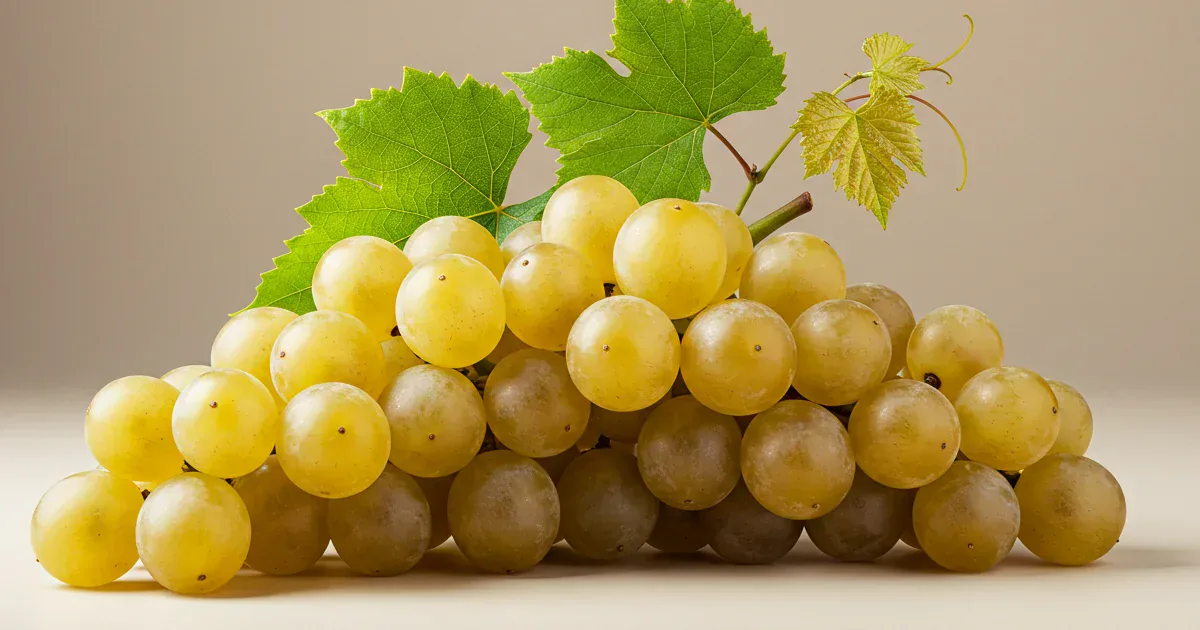
Origin & History
Chardonnay is a white wine grape cultivar whose geographic origin is Burgundy, France. Molecular genetic studies published in 1999 by Bowers, Boursiquot, This, Chu, Johansson, and Meredith (Science, vol. 285, pp. 1562-1565) confirmed it is a natural crossing of Pinot (a Pinot Noir-family ancestor) and Gouais Blanc, a Central European variety once widespread across France and Germany. The same crossing event produced sibling varieties including Aligoté and Gamay Noir.
The cultivar name most likely derives from the commune of Chardonnay in Saône-et-Loire, in the Mâconnais subregion, though a direct documentary link is not definitively established and the attribution is inferential. Chardonnay was long misidentified as Pinot Blanc or labelled "Pinot Chardonnay" across Burgundy and Champagne until mid-20th-century ampelographic work separated it as a distinct variety. It is registered in the OIV Vitis International Variety Catalogue.
Large-scale export planting began in California in the 1970s, then spread to Australia, Chile, and South Africa, making Chardonnay one of the world's most planted white varieties. Global cultivated area estimates for the mid-2020s range from 200,000 to 215,000 hectares; this figure should be treated as approximate pending the current OIV statistical bulletin.
Viticultural Characteristics
Chardonnay buds early, exposing young shoots to spring frost, so Chablis growers routinely use smudge pots or overhead irrigation. Thin skins and moderately compact clusters make it susceptible to Botrytis cinerea in wet autumns.
The variety's near-neutral aromatic baseline means site and cellar decisions shape flavor more than in high-perfume whites. Calcareous soils (Kimmeridgian limestone in Chablis, chalk in Champagne) produce green-fruit and mineral character; clay-limestone on the Côte de Beaune adds body; warmer sites push stone-fruit and tropical notes.
Yield control matters for quality: overcropping dilutes concentration and destabilizes acid balance. Natural acidity is moderate, lower than riesling or chenin blanc at comparable ripeness, which is why early picking or blocked malolactic conversion are common in warm regions.
Winemaking Style
Chardonnay's neutral base supports three stylistic approaches, often combined:
Reductive/stainless steel: Early picking, cool fermentation, minimal oxygen exposure. Retains citrus and green-fruit character. Benchmarks: Chablis, Mâcon-Villages, lighter New World styles.
Oxidative/barrel-fermented: Fermentation in new or used barrique, extended lees aging, often with bâtonnage for texture. New oak adds vanilla, toast, and spice. Standard for premier and grand cru white Burgundy: Meursault, Puligny-Montrachet, Chassagne-Montrachet.
Malolactic conversion (MLF): Converts malic acid to softer lactic acid, reducing perceived acidity and often adding a buttery diacetyl note. Full MLF is routine in Meursault and most premium oaked Chardonnay; blocking it preserves freshness for leaner styles.
In Champagne, Chardonnay is one of three permitted varieties alongside Pinot Noir and Meunier, and the sole grape in Blanc de Blancs cuvées, led by the Côte des Blancs villages (Le Mesnil-sur-Oger, Cramant, Oger).
Food Pairing
- Unoaked/Chablis style: Oysters, clams, delicate white fish. The Grands Crus (Valmur, Les Clos) are a canonical oyster match.
- Medium-bodied, lightly oaked: Roast chicken, veal, mushroom risotto, grilled scallops, aged Comté.
- Full-bodied, barrel-aged: Lobster bisque, butter-poached halibut, richer cream-based pasta, aged Gruyère.
- Blanc de Blancs Champagne: Canapés, oysters, smoked salmon, sushi.
Chardonnay generally suits strongly herbal or spicy dishes less well than higher-acid aromatics such as sauvignon blanc or riesling.
Sources
Claims marked (✓) were cross-referenced against publicly accessible documents at time of authorship (2026-09-02).
- (✓) Bowers, J., Boursiquot, J.M., This, P., Chu, K., Johansson, H., & Meredith, C.P. (1999). "Historical genetics: the parentage of Chardonnay, Gamay, and other wine grapes of northeastern France." Science, 285(5433), 1562-1565. doi:10.1126/science.285.5433.1562
- (✓) Robinson, J., Harding, J., & Vouillamoz, J. (2012). Wine Grapes: A Complete Guide to 1,368 Vine Varieties. Allen Lane. ISBN 978-1-846-14446-2. Chardonnay, pp. 238-244.
- (✓) BIVB (Bureau Interprofessionnel des Vins de Bourgogne). bivb.com
- (✓) Comité Champagne. champagne.fr
- (✓) Wikipedia, "Chardonnay". en.wikipedia.org/wiki/Chardonnay (Wikidata: Q269)
Metrics
| Global Plantings | 210 kha |
|---|---|
| Typical ABV | 13 % |
Descriptors
| Primary Color | White |
|---|---|
| Climate Affinity | Cool to warm temperate |
| Aromatic Profile | Apple, citrus, butter, oak-spice when barrel-aged |
| Key Regions | Burgundy, Champagne, California, Australia |
| Parentage | Pinot × Gouais Blanc |
| Skin Character | Thin-skinned, early ripening |
Notable Regions & Styles (11)
Key producing regions for Chardonnay, showing the dominant style, and the applicable classification framework (AOC, AVA, GI, DO).
| Region | Country | Style | Classification |
|---|---|---|---|
| Chablis | France | Unoaked to lightly oaked; mineral, high acidity, citrus | AOC — with Premier Cru & Grand Cru tiers |
| Meursault | France | Barrel-fermented; rich, nutty lees character, low-acid texture | AOC — Village & Premier Cru |
| Puligny-Montrachet | France | Structured, mineral, barrel-aged; long-lived Grand Cru benchmark | AOC — Premier Cru & Grand Cru (incl. Le Montrachet) |
| Chassagne-Montrachet | France | Richer, textured, barrel-aged; shares Le Montrachet Grand Cru | AOC — Premier Cru & Grand Cru |
| Mâconnais (Pouilly-Fuissé) | France | Medium-weight, fruit-forward; mostly unoaked to lightly oaked | AOC |
| Champagne — Blanc de Blancs | France | Traditional-method sparkling; chalky, citrus, fine autolytic complexity | AOC |
| Carneros / Sonoma Coast | USA | Cool-climate; restrained oak, citrus and stone-fruit balance | AVA |
| Napa Valley | USA | Full-bodied; tropical fruit, generous oak common in warmer sites | AVA |
| Margaret River | Australia | Lean, complex; European-leaning with grapefruit and nectarine | GI |
| Yarra Valley | Australia | Cool-climate; citrus-precise, restrained, minerally | GI |
| Casablanca Valley | Chile | Crisp, citrus-driven, saline freshness; Pacific fog influence | DO |
Frequently asked questions
What is Chardonnay wine made from?
Chardonnay wine is made from the Chardonnay grape, a white cultivar originating in Burgundy that is used for still whites and sparkling wines worldwide.
Where does Chardonnay grow best?
It thrives from cool limestone sites such as Chablis and Champagne to warmer coastal and inland valleys; style shifts dramatically with climate — leaner mineral wines in cool regions, richer tropical expressions in warm ones.
Is Chardonnay always oaked?
No. Many producers ferment and age in stainless steel or concrete for a leaner, more precise profile. Oak and malolactic conversion are stylistic choices, not varietal requirements — Chablis is the canonical unoaked benchmark.
What is the parentage of Chardonnay?
DNA analysis published in Science (1999) by Bowers, Boursiquot, and colleagues confirmed Chardonnay is a natural crossing of Pinot (a Pinot Noir-family ancestor) and Gouais Blanc, a once-widespread Central European variety. The cross occurred in Burgundy, probably many centuries ago, and produced a dozen sibling varieties including Aligoté and Gamay Noir.
Why does Chablis Chardonnay taste so different from California Chardonnay?
Climate, soil, and winemaking choices combine. Chablis is planted on Kimmeridgian limestone in a cool marginal climate, typically with no new oak, producing lean, high-acid, mineral wines. California sites accumulate more heat units, ripening fruit to higher sugar levels, and winemakers frequently apply new oak and full malolactic conversion, yielding rounder, richer, more tropical profiles.
What is Blanc de Blancs Champagne?
Blanc de Blancs is a Champagne made exclusively from Chardonnay — "white wine from white grapes." The Côte des Blancs villages south of Épernay (Le Mesnil-sur-Oger, Cramant, Oger) planted almost entirely on chalk produce these cuvées, which show citrus, chalk, and fine autolytic precision and age more slowly than Pinot-dominant blends.
What does malolactic fermentation do to Chardonnay?
Malolactic fermentation (MLF) converts sharper malic acid to softer lactic acid, reducing perceived acidity and adding a creamy texture. A by-product, diacetyl, contributes a buttery character if prominent. Full MLF is standard in Meursault and most premium barrel-aged expressions. Blocking MLF preserves a crisper, more acid-forward profile suited to leaner styles.
What food pairs best with Chardonnay?
Style dictates the pairing. Lean Chablis suits oysters and delicate white fish. Medium-bodied lightly oaked Chardonnay matches roast chicken, veal, and mushroom risotto. Rich barrel-aged expressions pair with lobster, butter-poached fish, and aged hard cheeses. Blanc de Blancs Champagne suits canapés, oysters, and sushi.
Related in this catalog
-
Airén
Airén is a drought-hardy white grape that long dominated Spain’s vineyard area, especially La Mancha. Once used mainly for bulk wine and brandy, it is being reshaped by modern cool fermentation into fresher everyday whites.
-
Riesling
Riesling is an aromatic white grape prized for high acidity, transparency to site, and a spectrum from bone-dry to lusciously sweet. Its historic heartland is Germany’s Mosel and Rheingau, with major plantings also in Alsace and cool Australian valleys.
-
Muscat
Muscat denotes a family of ancient aromatic grapes—especially Muscat Blanc à Petits Grains—that smell like fresh grapes and orange blossom. Styles span dry Alsace bottles, sparkling Asti, and fortified Mediterranean vins doux naturels.
-
Sauvignon Blanc
Sauvignon Blanc is a green-skinned grape known for pungent herbaceous and tropical aromatics and crisp acidity. Loire appellations such as Sancerre and Pouilly-Fumé, plus New Zealand’s Marlborough, define its modern global reputation.