
Origin & History
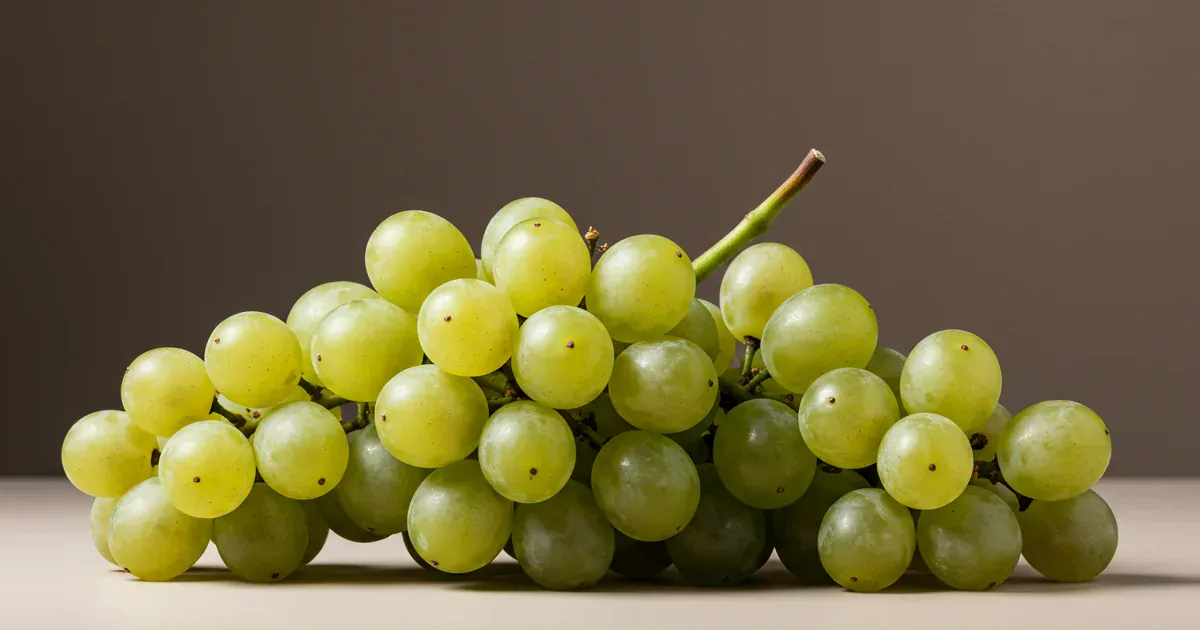
Riesling is the flagship white grape of Germany, with documented history in the Rhine Valley reaching back to a 1435 cellar record of the Count of Katzenelnbogen (Robinson, Harding & Vouillamoz, Wine Grapes, 2012, ISBN 978-1-846-14446-2). Proposed parents are a Traminer-family variety and Gouais Blanc (Heunisch), consistent with DNA marker studies, but a fully confirmed direct parentage has not been established to the standard of Chardonnay's 1999 Science paper; treat the parentage claim as probable rather than proven. Registered in the OIV Vitis International Variety Catalogue (VIVC). Global planted area is approximately 50,000 to 65,000 hectares (approximate; verify against current OIV statistical bulletin).
Viticultural Characteristics
Riesling buds and ripens late relative to Chardonnay, reducing spring frost exposure and allowing extended hang time in cool Rhine and Mosel valleys. Steep south-facing Mosel slate slopes act as heat sinks, enabling ripening in a marginal climate. High natural acidity and slow sugar accumulation produce the wide must-weight range that underpins Germany's Praedikat classification. The variety is moderately susceptible to Botrytis cinerea: grey rot under wet conditions, but noble rot (Edelfaule) under ideal alternating humidity-sun cycles, enabling Beerenauslese and Trockenbeerenauslese styles.
Winemaking Style
Almost universally unoaked; the priority is preserving aromatic intensity (lime blossom, citrus, slate mineral, stone fruit) and the variety's signature acidity. Germany's Praedikat system classifies by harvest must weight: Kabinett (lightest, lowest alcohol), Spatlese, Auslese, Beerenauslese, Trockenbeerenauslese (most concentrated), and Eiswein (from frozen grapes). Clare Valley and Eden Valley producers in Australia, and most Alsace producers, ferment fully dry. A petrol or kerosene note (from the compound TDN, 1,1,6-trimethyl-1,2-dihydronaphthalene) develops with bottle age and is considered a positive complexity marker in mature Riesling.
Food Pairing
- Dry (Kabinett, trocken): freshwater trout, crab, white fish, mild soft cheese
- Off-dry (Spatlese): Thai and Vietnamese dishes, Korean fried chicken (residual sugar balances chili heat)
- Auslese and richer: foie gras, Roquefort, pear tart
- Aged Riesling: roast pork, sauerkraut, smoked fish
Sources
Claims marked (✓) were cross-referenced against publicly accessible documents at time of authorship (2026-09-02)
- (✓) Robinson, J., Harding, J., & Vouillamoz, J. (2012). Wine Grapes: A Complete Guide to 1,368 Vine Varieties. Allen Lane. ISBN 978-1-846-14446-2. Riesling entry.
- (✓) Deutsches Weininstitut (DWI). Quality wine categories. deutscheweine.de
- (✓) Wikipedia, "Riesling". en.wikipedia.org/wiki/Riesling (Wikidata: Q270)
- Parentage note: proposed Traminer x Gouais Blanc cross has not been confirmed at the same standard as Chardonnay's 1999 Science paper; treat as probable rather than proven.
Metrics
| Global Plantings | 64 kha |
|---|---|
| Typical ABV | 11.5 % |
Descriptors
| Primary Color | White |
|---|---|
| Climate Affinity | Cool climate |
| Aromatic Profile | Lime, slate, petrol with age, white flowers |
| Key Regions | Mosel, Rheingau, Alsace, Clare Valley |
| Parentage | Likely Heunisch × Traminer-related lineage |
| Skin Character | Thick-skinned, late ripening, frost-hardy |
Notable Regions & Styles (7)
Key producing regions for this variety, showing the dominant style and the applicable classification framework (AOC, DOC, AVA, GI, DO, DAC, PDO).
| Region | Country | Style | Classification |
|---|---|---|---|
| Mosel | Germany | Slate soils; Kabinett to TBA; delicate, high-acid, off-dry to sweet | Pradikat (GG to TBA) |
| Rheingau | Germany | Fuller body; benchmark for dry (Grosses Gewachs) and Spatlese styles | Pradikat / GG |
| Pfalz | Germany | Warmer than Mosel; richer stone-fruit character; dry and off-dry | Pradikat / GG |
| Nahe | Germany | Floral, mineral; diverse soils from volcanic to slate | Pradikat |
| Alsace | France | Dry to late-harvest; richest and most full-bodied European Riesling | AOC (Grand Cru available) |
| Clare Valley | Australia | Dry, high-acid; intense lime and slate; ages to petrol over 10-20 years | GI |
| Eden Valley | Australia | Higher altitude; fine, floral; slower-developing than Clare Valley | GI |
Frequently asked questions
What is Riesling wine?
Riesling is a white wine grape native to Germany's Rhine Valley, producing wines that range from bone-dry and mineral to profoundly sweet, depending on the harvest ripeness level and winemaking approach.
Is Riesling always sweet?
No. Riesling ranges from fully dry (trocken in Germany; Clare Valley and Eden Valley in Australia; Alsace) to intensely sweet Trockenbeerenauslese and Eiswein. Label terms and ABV are the clearest guides: below 10% abv usually signals residual sugar.
What does Riesling taste like?
In cool climates: lime, green apple, white flowers, and slate mineral notes with high acidity. With age, mature Riesling develops a distinctive petrol or kerosene complexity (from TDN). Warmer-site examples show peach and apricot with less acidity.
What is the German Praedikat classification for Riesling?
The Praedikat system classifies wines by grape must weight (sugar content) at harvest: Kabinett (lightest), Spatlese, Auslese, Beerenauslese, Trockenbeerenauslese (most concentrated), and Eiswein (from naturally frozen grapes). Higher Pradikat does not always mean sweeter in the glass, as some Auslese and Spatlese are fermented dry.
What food pairs with Riesling?
Dry Riesling suits crab, white fish, and mild cheeses. Off-dry Spatlese excels with spicy Asian food because residual sugar tempers chili heat. Richer Auslese partners foie gras and blue cheese. Aged Riesling complements pork and smoked fish.
Related in this catalog
-
Chardonnay
Chardonnay is a green-skinned wine grape that yields still and sparkling white wines across cool and warm climates. Native to Burgundy, it is among the world’s most planted white varieties and adapts from lean Chablis styles to richer oak-fermented expressions.
-
Sauvignon Blanc
Sauvignon Blanc is a green-skinned grape known for pungent herbaceous and tropical aromatics and crisp acidity. Loire appellations such as Sancerre and Pouilly-Fumé, plus New Zealand’s Marlborough, define its modern global reputation.
-
Airén
Airén is a drought-hardy white grape that long dominated Spain’s vineyard area, especially La Mancha. Once used mainly for bulk wine and brandy, it is being reshaped by modern cool fermentation into fresher everyday whites.
-
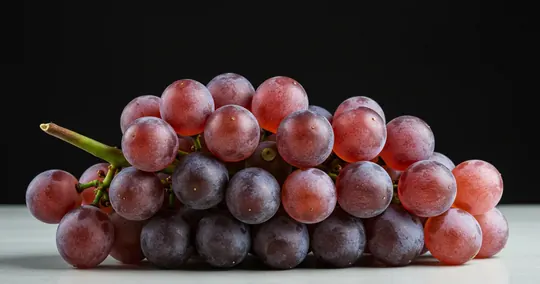
Pinot Gris
Pinot Gris (Pinot Grigio) is a Pinot Noir color mutation with grey-pink skins that produces white wines from light and crisp to rich and spicy. Alsace, northern Italy, and Oregon are leading quality centers.