
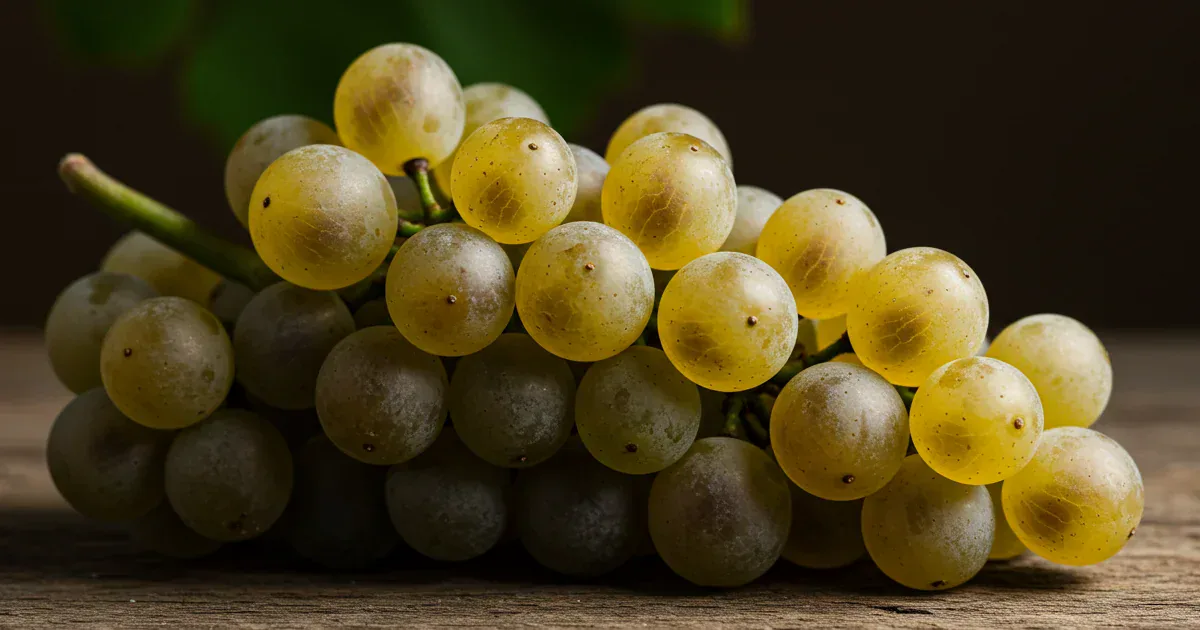
Origin & History
Airen is the dominant white grape of Castilla-La Mancha, the vast inland plateau of central Spain. Its parentage and geographic origin within Iberia have not been determined by DNA analysis; Robinson, Harding & Vouillamoz (Wine Grapes, 2012, ISBN 978-1-846-14446-2) report no confirmed parents. For much of the late 20th century Airen was the world's most planted wine grape by surface area, covering an estimated 400,000-plus hectares at its peak (approximately; this figure varies considerably by source and year; verify against relevant OIV statistical bulletins). Extensive dry-farming across the Meseta supported Spain's brandy and bulk wine industries. Acreage has declined substantially since the 1990s as growers replanted to Tempranillo, Verdejo, and other varieties; current estimates approximate 180,000 to 200,000 hectares (verify against current OIV data).
Viticultural Characteristics
Airen is specifically adapted to Castilla-La Mancha's extreme climate: scorching summers (regularly exceeding 40 degrees Celsius), harsh winters, and very low annual rainfall (250-350 mm in La Mancha; approximate). Wide vine-spacing, typically up to 3 m between dry-farmed vines, reduces competition for groundwater. Thick skins and deep root systems protect against drought stress. The variety's neutral aromatic profile is partly inherent and partly a legacy of traditional high-temperature fermentation without temperature control, which is now largely replaced by modern cold fermentation in quality production.
Winemaking Style
Historically used for brandy distillation and bulk white wine. Temperature-controlled cold fermentation at 12-16 degrees Celsius produces fresh, neutral whites with light citrus character but limited aromatic complexity; the variety's ceiling is substantially lower than albarino or Verdejo. Some producers blend Airen with Macabeo (Viura) for added floral notes. Modern renditions are clean and commercially serviceable but rarely expressive without significant intervention.
Food Pairing
- Light and cold: manchego tapas, cured ham (jamon), simple fried fish
- Neutral profile makes it a versatile, undemanding everyday white for light Castilian dishes and tapas
Sources
All claims for Airen should be treated with additional caution: Airen is among the least-documented major varieties in academic wine literature relative to its planted area. Cited figures are approximate and contested.
- Robinson, J., Harding, J., & Vouillamoz, J. (2012). Wine Grapes: A Complete Guide to 1,368 Vine Varieties. Allen Lane. ISBN 978-1-846-14446-2. Airen entry.
- Wikipedia, "Airen". en.wikipedia.org/wiki/Air%C3%A9n (Wikidata: Q280)
- Sourcing note for operator: Airen has noticeably weaker academic sourcing than other varieties in this dataset. Planted-area claims (especially "world's most planted") vary widely by source, year, and methodology; verify before using in outreach.
Metrics
| Global Plantings | 180 kha |
|---|---|
| Typical ABV | 12 % |
Descriptors
| Primary Color | White |
|---|---|
| Climate Affinity | Hot continental |
| Aromatic Profile | Neutral citrus, hay, light honey |
| Key Regions | La Mancha, Spain |
| Parentage | Iberian white; historic Spanish workhorse |
| Skin Character | Thick skins, drought-tolerant |
Notable Regions & Styles (3)
Key producing regions for this variety, showing the dominant style and the applicable classification framework (AOC, DOC, AVA, GI, DO, DAC, PDO).
| Region | Country | Style | Classification |
|---|---|---|---|
| La Mancha | Spain | High-volume; neutral, fresh; also used as brandy distillation base | DO |
| Valdepenas | Spain | Warm; sometimes blended; straightforward everyday white | DO |
| Manchuela | Spain | Dry-farmed; older vines; slightly more concentration | DO |
Frequently asked questions
What is Airen wine?
Airen is a white grape variety that dominates Spain's Castilla-La Mancha region. At its peak it was the world's most planted wine grape by surface area. It produces neutral, light-bodied dry whites and is historically important for Spanish brandy production.
Why is Airen so widely planted if it's not well known?
Airen's dominance was functional rather than quality-driven: thick skins, deep roots, and drought tolerance allowed dry-farming on Spain's arid Meseta at yields sufficient to supply bulk wine and brandy distillation for decades. Quality wine producers have since replanted much of it to more aromatic varieties.
What does Airen wine taste like?
Modern temperature-controlled Airen is clean and fresh with light citrus and neutral character. It lacks the aromatic intensity of Albarino or Verdejo. It is not a highly expressive variety, and most examples are intended for immediate consumption rather than ageing.
Related in this catalog
-
Muscat
Muscat denotes a family of ancient aromatic grapes—especially Muscat Blanc à Petits Grains—that smell like fresh grapes and orange blossom. Styles span dry Alsace bottles, sparkling Asti, and fortified Mediterranean vins doux naturels.
-
Chardonnay
Chardonnay is a green-skinned wine grape that yields still and sparkling white wines across cool and warm climates. Native to Burgundy, it is among the world’s most planted white varieties and adapts from lean Chablis styles to richer oak-fermented expressions.
-
Grüner Veltliner
Grüner Veltliner is Austria’s signature white grape, delivering peppery, citrus-driven wines from light Heuriger styles to monumental Smaragd bottlings. The Wachau, Kremstal, and Kamptal define its global reputation.
-
Riesling
Riesling is an aromatic white grape prized for high acidity, transparency to site, and a spectrum from bone-dry to lusciously sweet. Its historic heartland is Germany’s Mosel and Rheingau, with major plantings also in Alsace and cool Australian valleys.