
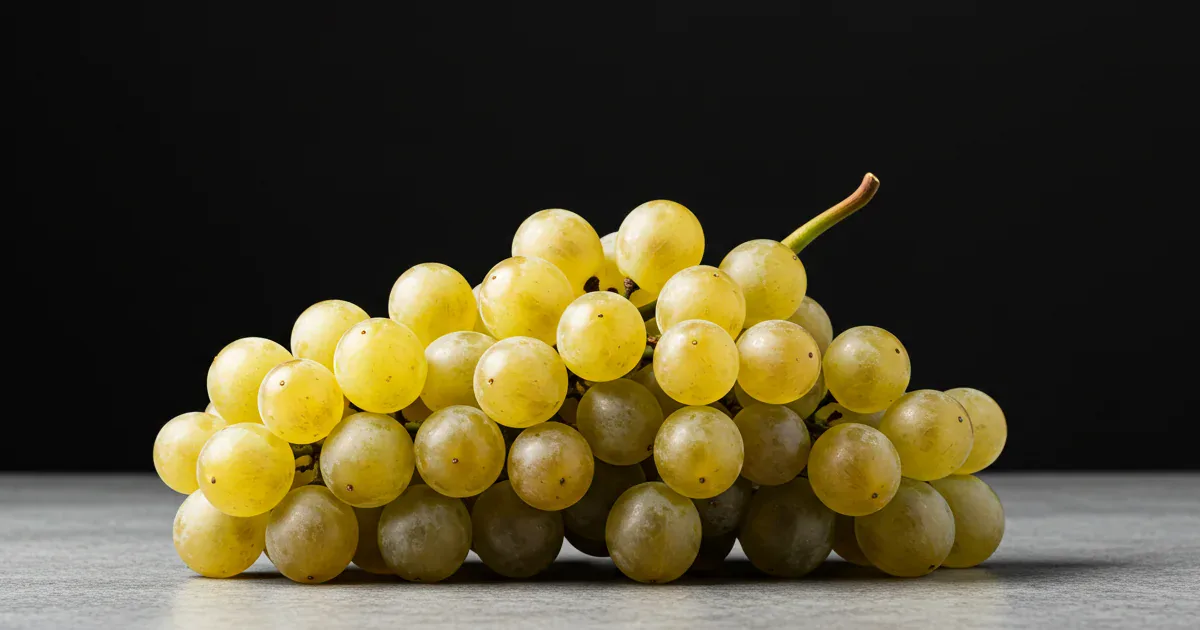
Origin & History
Semillon is native to Bordeaux, France, where it has been documented since at least the 18th century. Its parentage has not been established by DNA analysis; Robinson, Harding & Vouillamoz (Wine Grapes, 2012, ISBN 978-1-846-14446-2) report the parents as unknown. Widely planted historically in South America (Argentina, Chile) and Australia; at its peak it was among the most planted white grapes in the world by surface area, but acreage has contracted significantly as Chardonnay and Sauvignon Blanc expanded globally. Current global plantings are approximately 18,000 hectares (approximate; verify against current OIV data). Registered in the OIV VIVC (Wikidata: Q275).
Viticultural Characteristics
Thin skins and moderate-to-high yields make Semillon highly susceptible to Botrytis cinerea. In Sauternes and Barsac, morning mist from the Ciron river creates humidity, and afternoon sun dries the clusters, enabling noble rot rather than grey rot, concentrating sugars and acids for botrytized sweet wines. In dry years the same sites produce dry whites. Hunter Valley, Australia operates in cooler and more humid conditions; early harvesting at relatively low sugar levels preserves high natural acidity.
Winemaking Style
Three principal expressions: dry blend (Pessac-Leognan, Bordeaux: barrel-aged blend with Sauvignon Blanc for structure and longevity); dry varietal (Hunter Valley: unoaked, stainless steel, requiring 5 to 20 years bottle age for the classic toast, beeswax, and lanolin profile to emerge from what appears thin and austere when young); botrytized sweet (Sauternes and Barsac: noble-rot concentration produces wines of extraordinary richness and 20-plus-year longevity, Chateau d'Yquem the global benchmark).
Food Pairing
- Young dry Hunter Valley: plain grilled white fish, oysters on the shell
- Aged Hunter Valley (10-plus years): lobster, rich seafood bisque, roast chicken
- Pessac-Leognan dry blend: sole meuniere, sea bass, white asparagus
- Sauternes: foie gras (the canonical match), Roquefort, creme brulee, fresh peaches
Sources
Claims marked (✓) were cross-referenced against publicly accessible documents at time of authorship (2026-09-02)
- (✓) Robinson, J., Harding, J., & Vouillamoz, J. (2012). Wine Grapes: A Complete Guide to 1,368 Vine Varieties. Allen Lane. ISBN 978-1-846-14446-2. Semillon entry.
- (✓) Conseil des Vins de Sauternes et Barsac. sauternes.com
- (✓) Wikipedia, "Semillon". en.wikipedia.org/wiki/S%C3%A9millon (Wikidata: Q275)
- Parentage of Semillon is not established; Robinson/Harding/Vouillamoz list it as unknown.
Metrics
| Global Plantings | 18 kha |
|---|---|
| Typical ABV | 12.5 % |
Descriptors
| Primary Color | White |
|---|---|
| Climate Affinity | Moderate to warm |
| Aromatic Profile | Lemon, beeswax, toast with age, honey when botrytized |
| Key Regions | Bordeaux, Hunter Valley, Sauternes |
| Parentage | Bordeaux white lineage |
| Skin Character | Thin skins, prone to noble rot |
Notable Regions & Styles (5)
Key producing regions for this variety, showing the dominant style and the applicable classification framework (AOC, DOC, AVA, GI, DO, DAC, PDO).
| Region | Country | Style | Classification |
|---|---|---|---|
| Sauternes | France | Botrytized sweet; noble rot; Chateau d'Yquem Premier Cru Superieur benchmark | AOC (Premier Cru Superieur and Premier Cru) |
| Barsac | France | Botrytized sweet; lighter and more elegant than Sauternes | AOC |
| Pessac-Leognan | France | Dry blend with Sauvignon Blanc; barrel-aged; age-worthy | AOC (Cru Classe de Graves) |
| Hunter Valley | Australia | Dry varietal, unoaked; requires 5-20 years bottle age; beeswax and toast complexity | GI |
| Barossa Valley | Australia | Rich, textured; often blended with Sauvignon Blanc or Chardonnay | GI |
Frequently asked questions
What is Semillon wine?
Semillon is a white grape from Bordeaux that produces three principal styles: dry blended whites (Pessac-Leognan), dry varietal whites (Hunter Valley, Australia) that require years of bottle age, and botrytized sweet wines (Sauternes, Barsac) that are among the world's most age-worthy.
What makes Sauternes wine so sweet?
Sauternes is made primarily from Semillon affected by noble rot (Botrytis cinerea). In optimal autumn conditions, morning mist from the Ciron river creates humidity for fungal growth, and afternoon sun dries the berries. Noble rot concentrates sugars, acids, and flavor compounds to extraordinary levels.
Why does Hunter Valley Semillon taste so different when aged?
Young Hunter Valley Semillon is lean, high-acid, and austere. With 5 to 15-plus years of bottle age, it develops toast, beeswax, lanolin, and dried citrus peel complexity through non-oxidative bottle aging processes. This transformation is a uniquely regional style not replicated elsewhere.
What food pairs with Semillon?
Young Hunter Valley Semillon pairs with oysters and grilled white fish. Aged Hunter Semillon suits lobster and rich seafood. Pessac-Leognan dry blend suits sole meuniere and sea bass. Sauternes is the canonical pairing for foie gras and matches Roquefort and creme brulee.
Related in this catalog
-
Viognier
Viognier is an aromatic white Rhône grape producing full-bodied wines with apricot, peach, and floral perfume. Condrieu is its tiny historic appellation; plantings have expanded modestly worldwide since the late twentieth century.
-
Gewürztraminer
Gewürztraminer is a pink-skinned aromatic grape producing deeply perfumed whites with lychee, rose, and spice notes. Alsace is its quality capital; the name signals the “spiced” (gewürz) Traminer mutation.
-
Chenin Blanc
Chenin Blanc is a versatile white grape with naturally high acidity, supporting dry, off-dry, sparkling, and sweet wines. The Loire Valley is its historic home; South Africa holds the largest modern plantings.
-
Albariño
Albariño (Alvarinho in Portugal) is a thick-skinned white grape from Galicia’s Rías Baixas and neighboring Vinho Verde. It yields aromatic, high-acid wines with citrus, peach, and Atlantic salinity.